
Prose protocol
A USP monograph, a journal methods section, or a researcher’s own description.
GEMSTONE is a node in the NSF PCL testbed network of programmable cloud laboratories.
Scientists should be able to describe an experiment in a manner that is natural to them — in prose — and to have their experiment run reliably and reproducibly in any automated laboratory. GEMSTONE is building the open standards and AI agents that make this approach possible — starting at Emerald Cloud Lab and setting the pattern for a national network of programmable cloud laboratories.
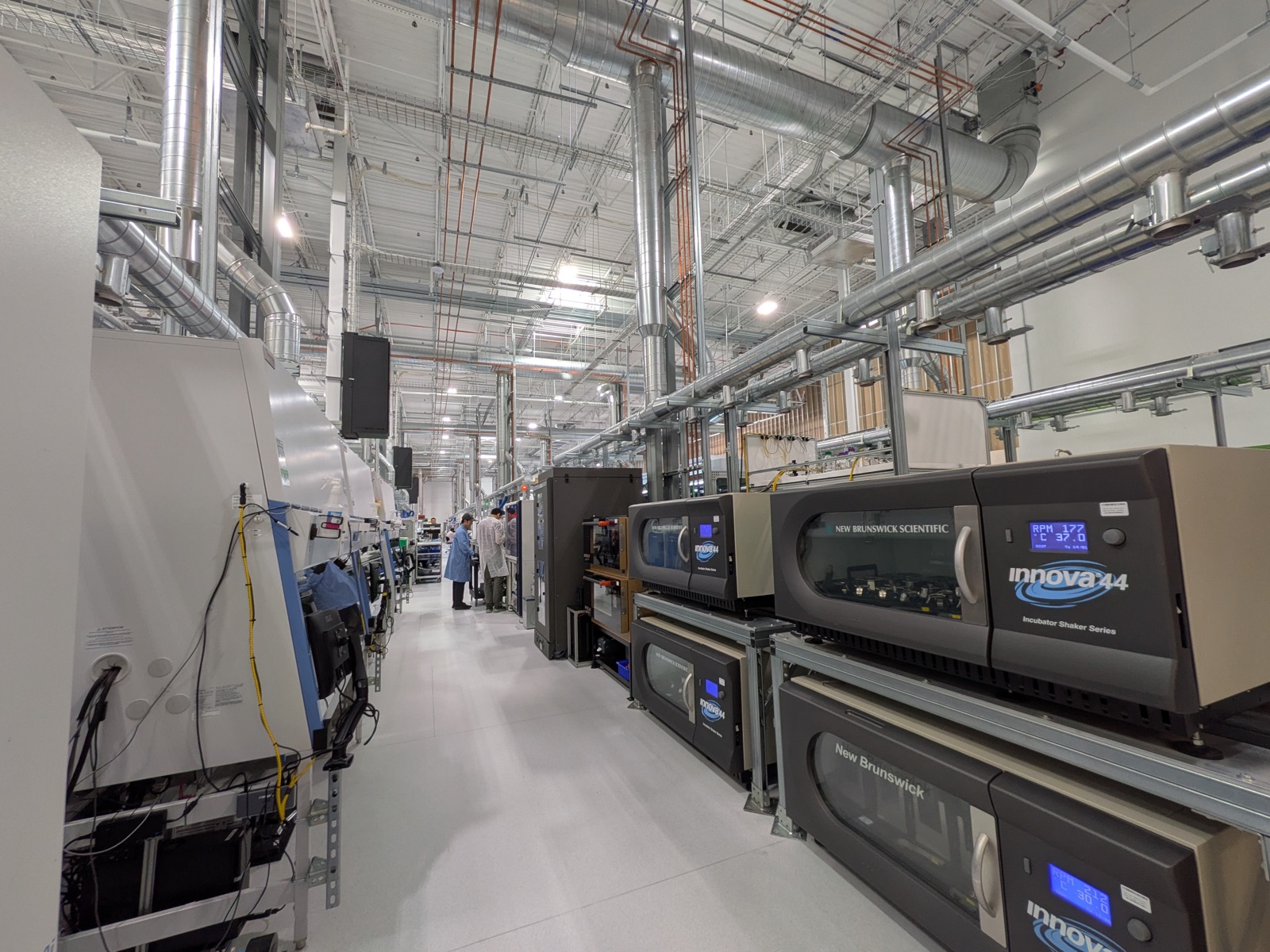
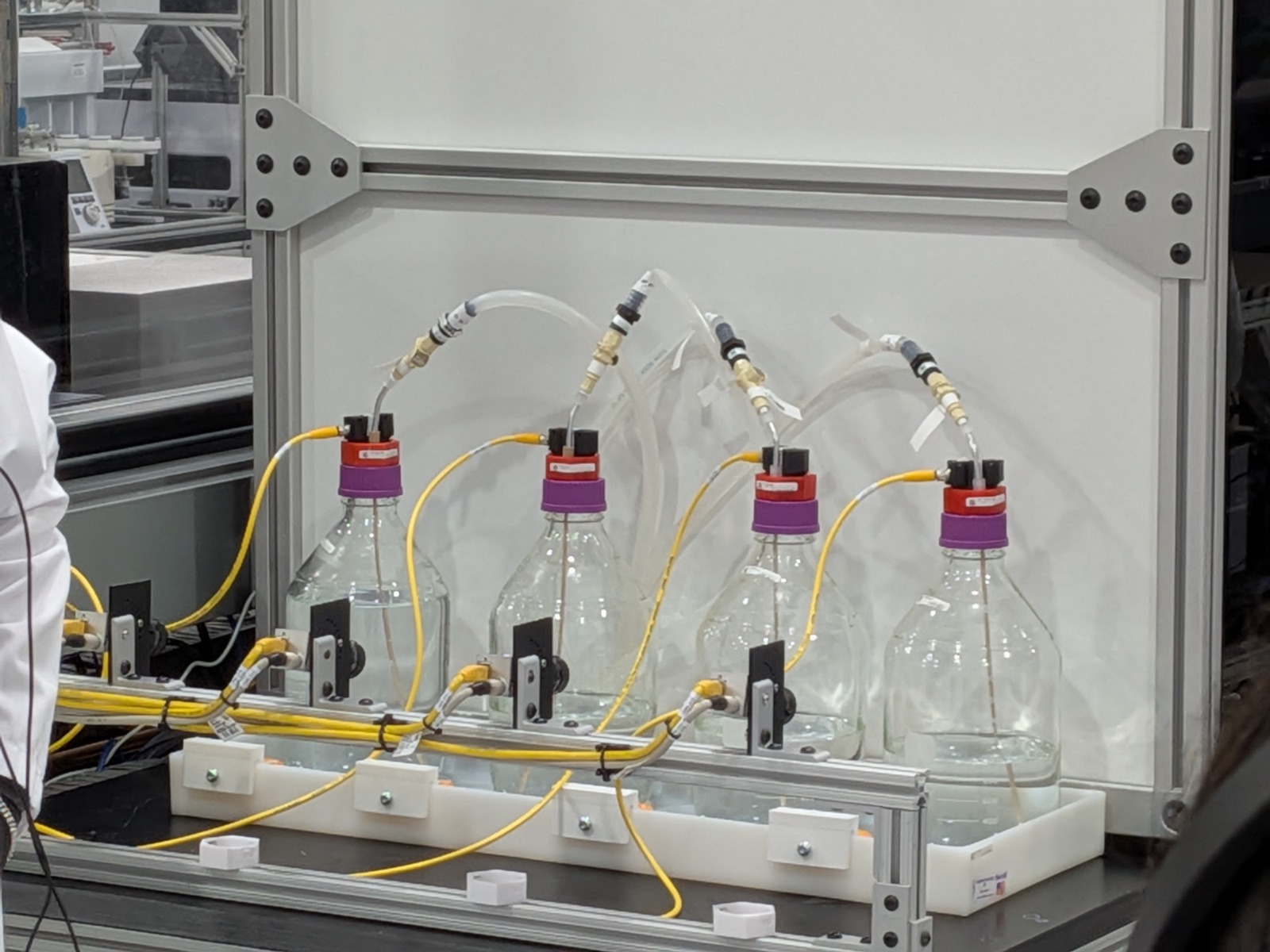
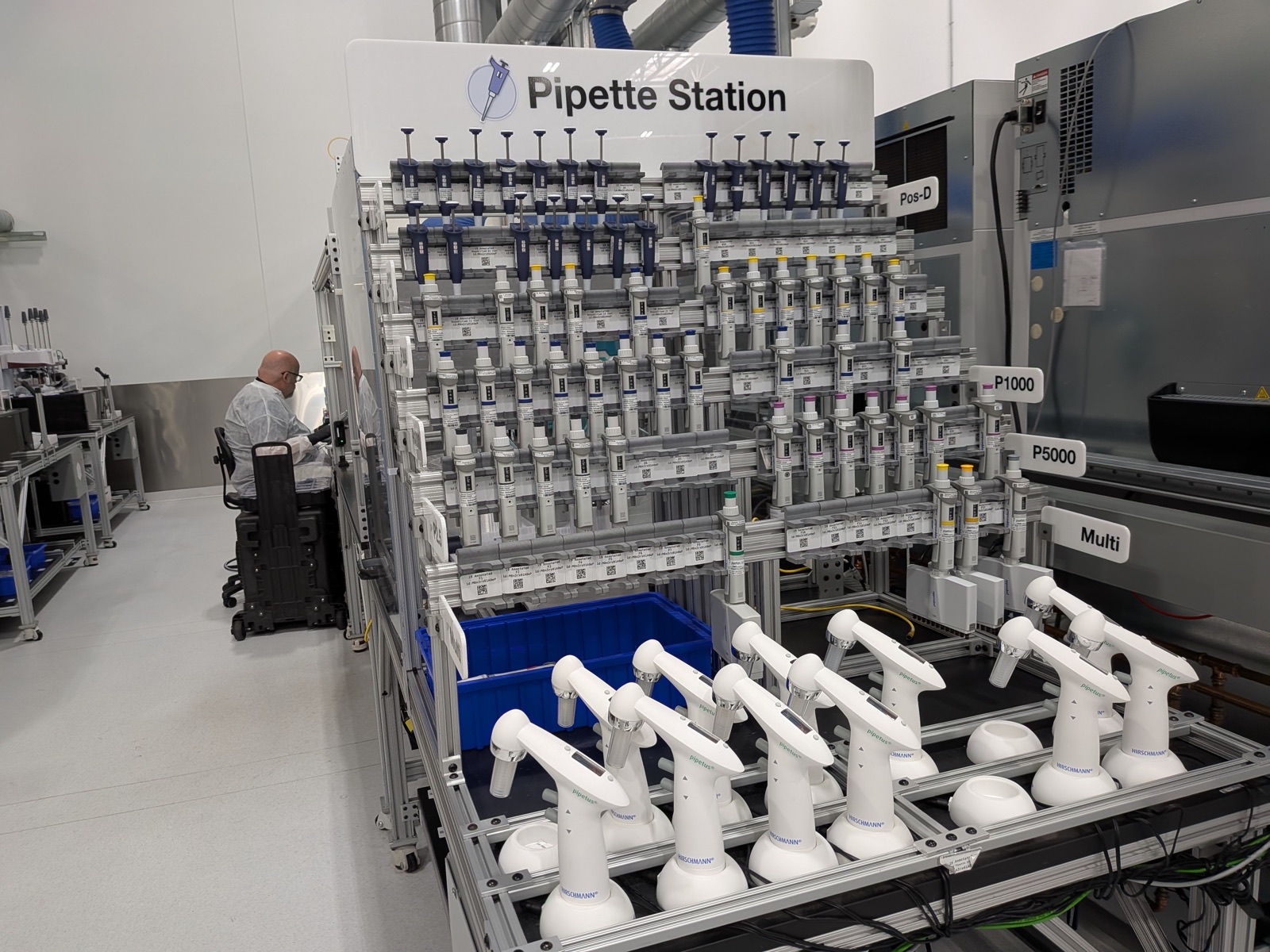
A major bottleneck in automated experimentation is method transfer: writing a specification that is sufficiently detailed to guide a programmable cloud laboratory reliably. Researchers are not trained to write out the myriad, low-level, common-sense details that machines require for workflow execution. GEMSTONE places an abstract, node-independent layer between natural language descriptions of experiments and the platform-specific languages that drive instruments and that enable efficient, fully automated workflows.
A USP monograph, a journal methods section, or a researcher’s own description.
An AI agent flags vague instructions — “mix thoroughly,” “adjust pH as needed” — and resolves them by asking the user or by running small experiments.
The Abstract Model for Bridging Experiment Representations: human-readable for validation, machine-executable for automation.
A second agent converts AMBER into a node’s own language, beginning with Emerald Cloud Lab’s Symbolic Lab Language.
Robotic handling, instrument runs, and provenance capture inside a 100,000 sq ft facility in Austin.
Outcomes return to TROVE, which adjusts parameters, updates constraints, and proposes improved variants.
All data generated through our approach are described using standards-adherent metadata and submitted to appropriate repositories, ensuring that datasets are findable, accessible, interoperable, and reusable.
One distributed laboratory spanning five organizations. Select a site to see what it contributes.
Leads the design of AMBER and the tools that edit and maintain it, building on CEDAR, BioPortal, and Protégé.
Provides the automated laboratory: instruments, automation, and the Symbolic Lab Language, contributed to the Test Bed under an open-source license.
Architects and validates the AI agents, designs the disambiguation experiments, and sets benchmarks for correctness, robustness, and safety.
Leads recruitment, onboarding, training, and assessment, and develops undergraduate curriculum around cloud laboratories.
Defines the initial experiments and provides the subject-matter expertise used to identify specifications and train the AI tools.
GEMSTONE is laying the shared, interoperable foundations for a national network of programmable cloud labs — open infrastructure that any researcher, institution, or lab can build on.
AMBER is an open, implementation-agnostic standard — meant to do for laboratory automation what STEP did for manufacturing: a shared interchange layer before each node becomes too siloed to interact with the others.
Emerald Cloud Lab’s Symbolic Lab Language is contributed to the Test Bed under an open-source license.
Trained models, AMBER templates, evaluation harnesses, and training data are shared under open licenses through a public GitHub repository.
AMBER specifications are versioned, provenance-tracked, and shared in open formats, so other nodes can inspect, re-execute, and extend workflows.
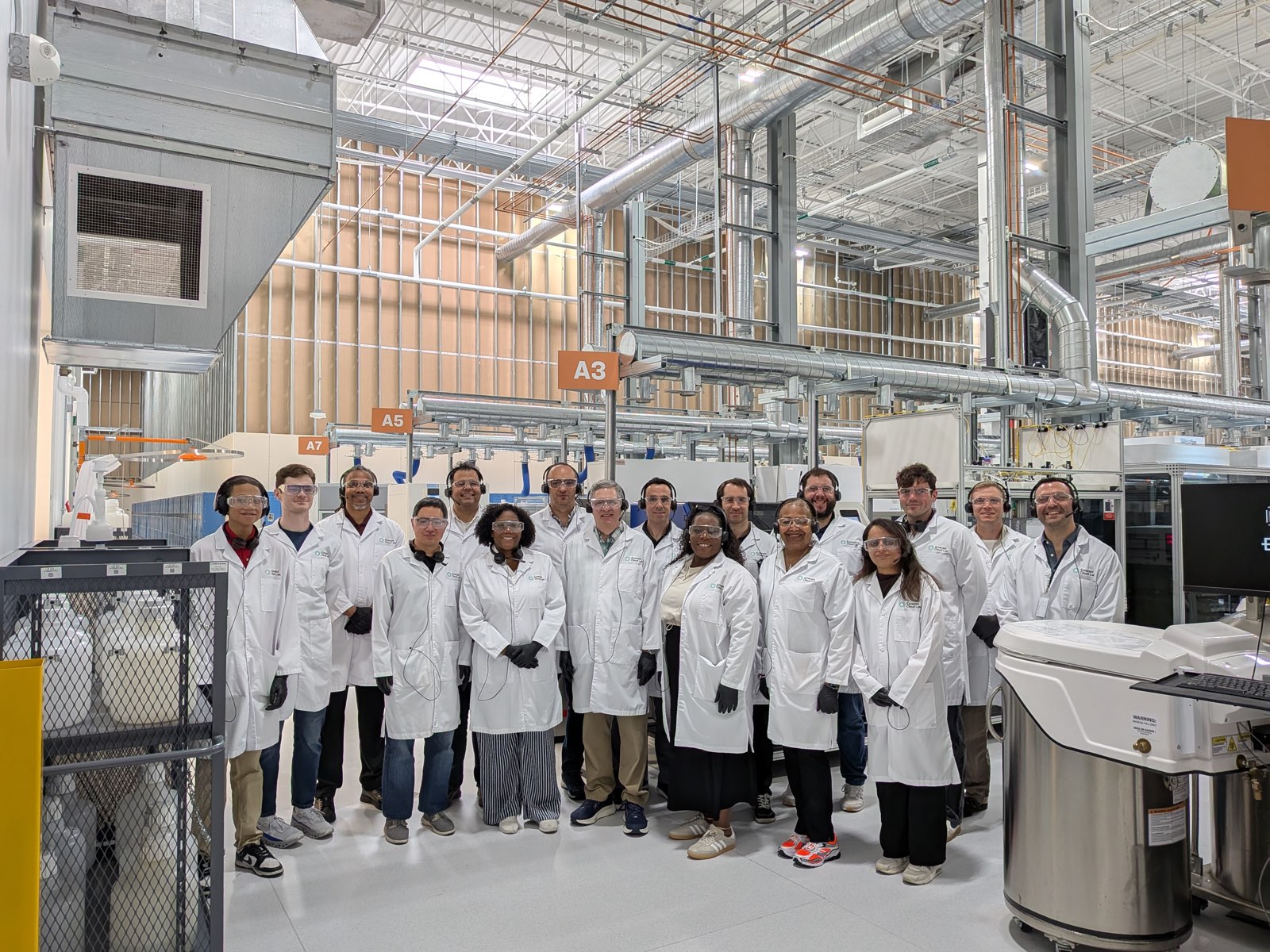
The GEMSTONE team gathered in Austin, Texas, on August 25–26, 2026, for the project’s kickoff meeting, hosted by Emerald Cloud Lab — the partner whose automated facility will ru...
Stanford Medicine has published a story on the National Science Foundation award funding GEMSTONE: a $20 million grant to develop the standards for programmable cloud laboratori...
The National Science Foundation has announced the program that GEMSTONE is part of: a $400 million investment — $380 million from NSF, with $20 million in philanthropic matching...